Precision and strength
Factory processing supports accurate joints, reliable geometry and expressive timber structures. Structural properties depend on the product and specification.

Bring your vision. Let’s create your world together.
A real timber material with a wide choice of profiles, finishes and architectural styles — from compact cabins to family homes.
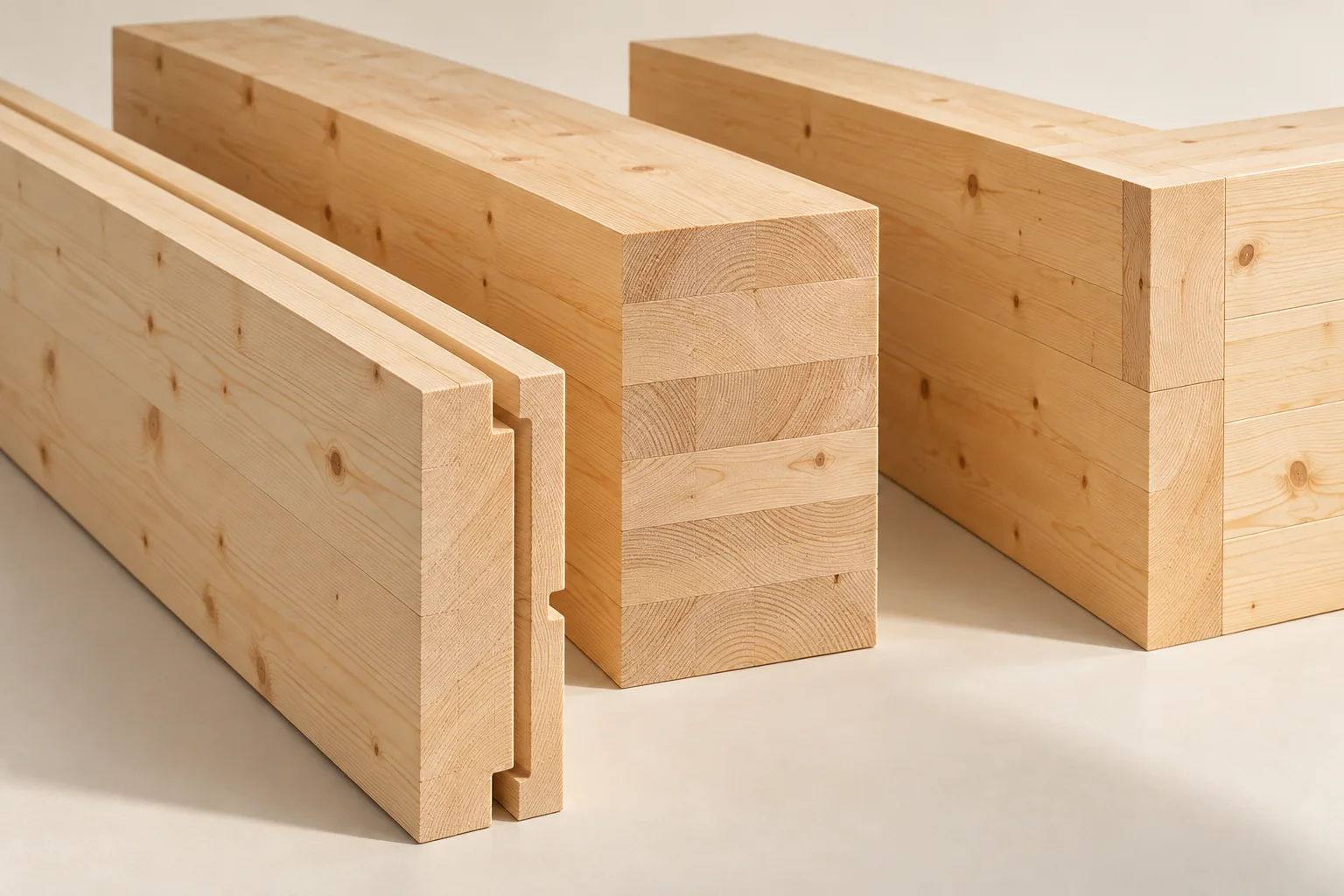
Selected, kiln-dried wooden lamellas are bonded into stable beams or profiled wall elements. The final geometry, species and jointing system are confirmed with each manufacturer.
Factory processing supports accurate joints, reliable geometry and expressive timber structures. Structural properties depend on the product and specification.
Wood is a relatively low-conductivity structural material. Year-round energy performance comes from the complete wall and roof build-up, insulation, airtightness, windows and detailing — not from wood alone.
Visible wood brings warmth and a tactile interior, from traditional timber rooms to clean contemporary architecture.
Correct detailing, suitable adhesives and coatings, water drainage and maintenance help glulam perform reliably. It is not inherently unsuitable for humid climates; prolonged uncontrolled wetting must still be avoided.
There is no single universal glulam profile. Lamella count, wall thickness, timber species, surface finish and interlocking details vary across manufacturers. We check the exact specification before offering a system.
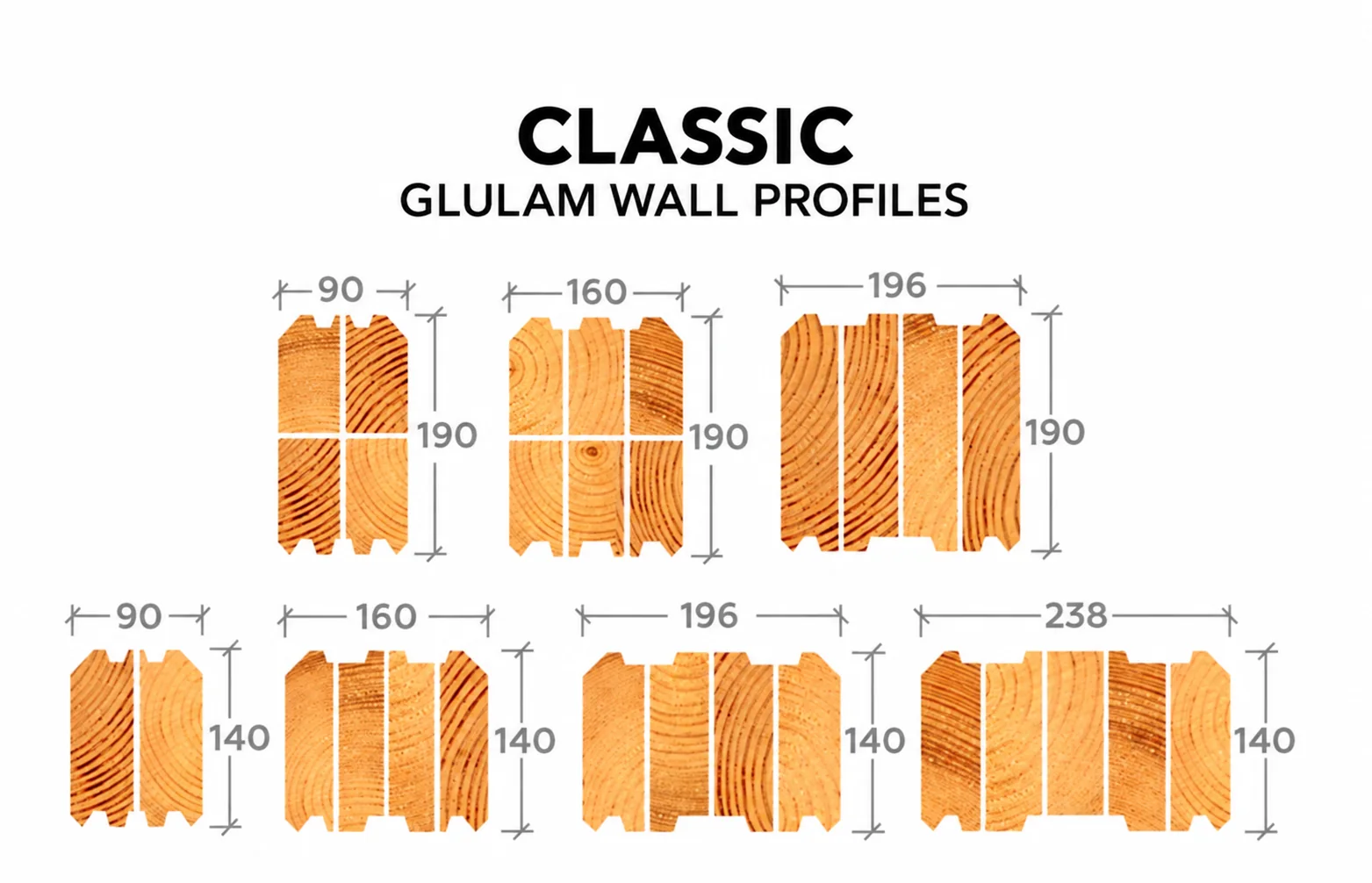
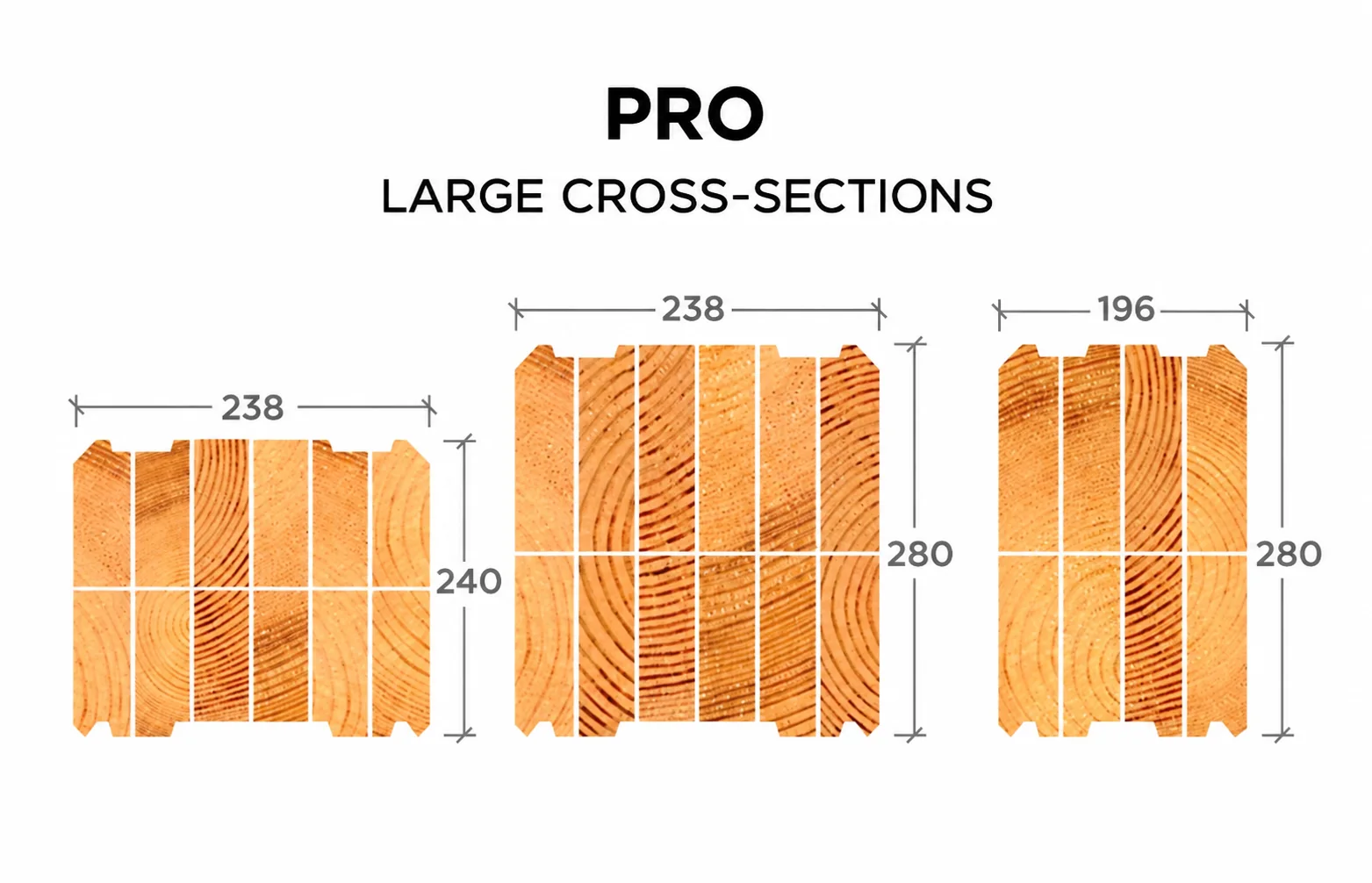
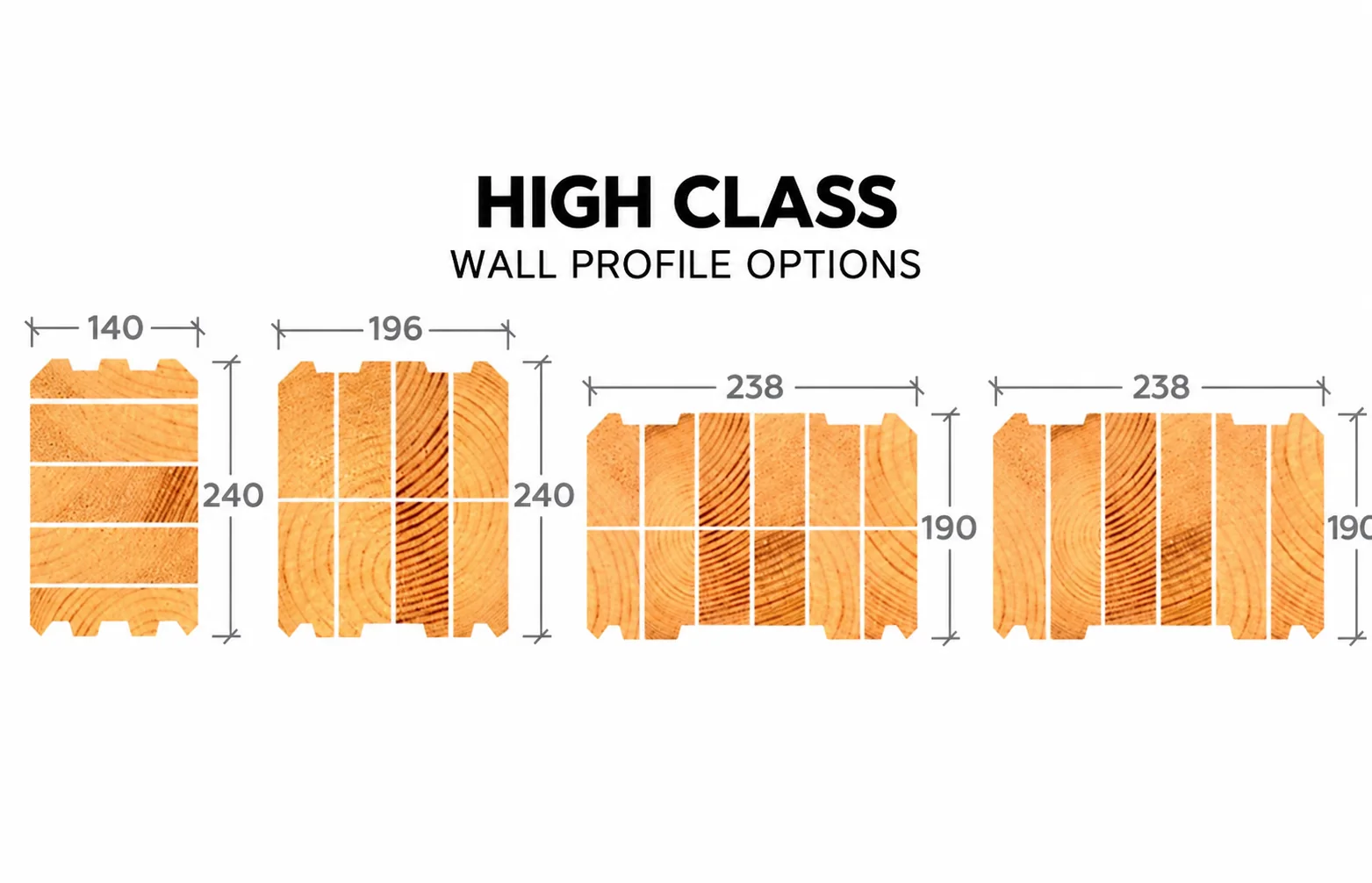
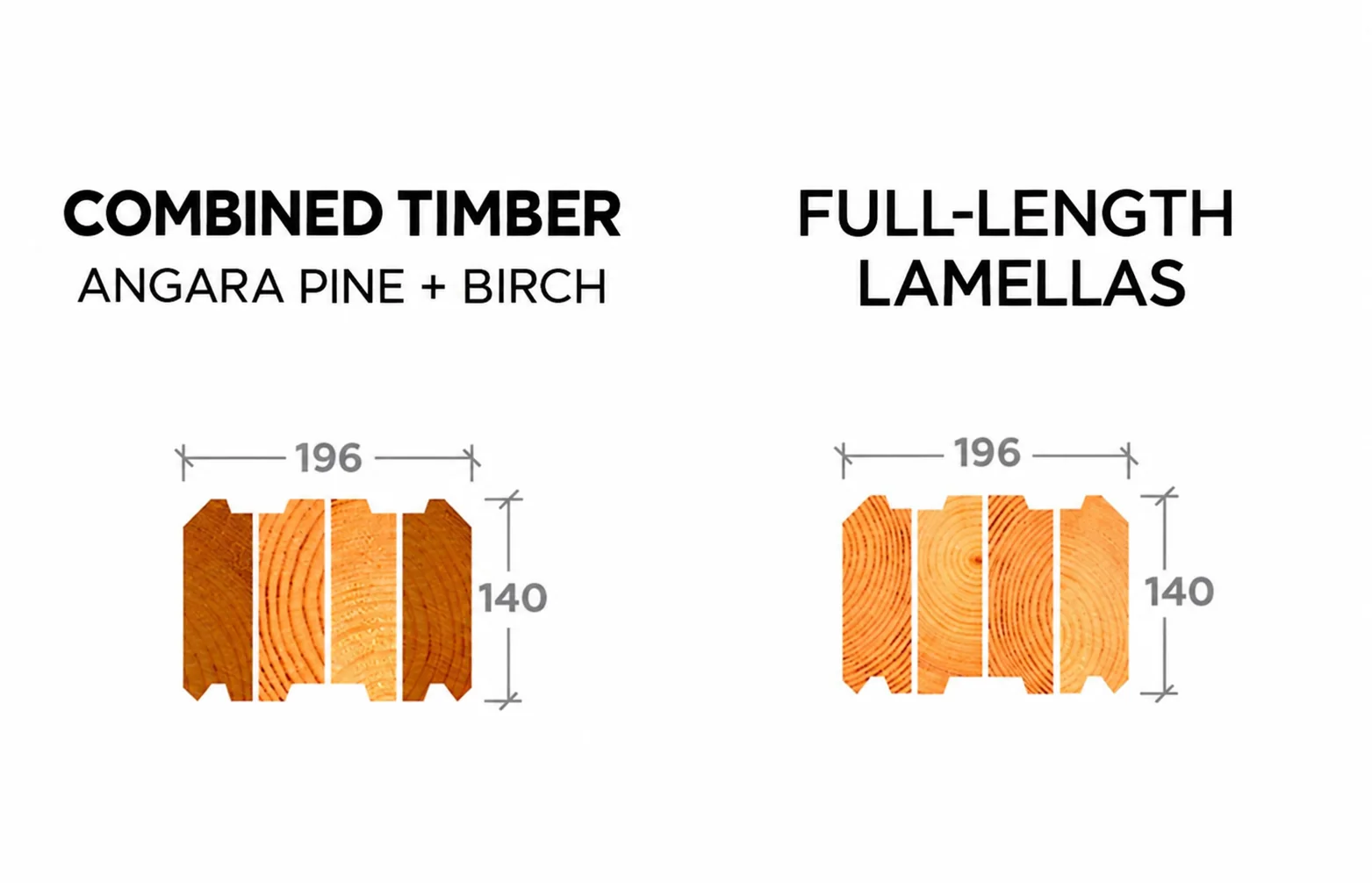
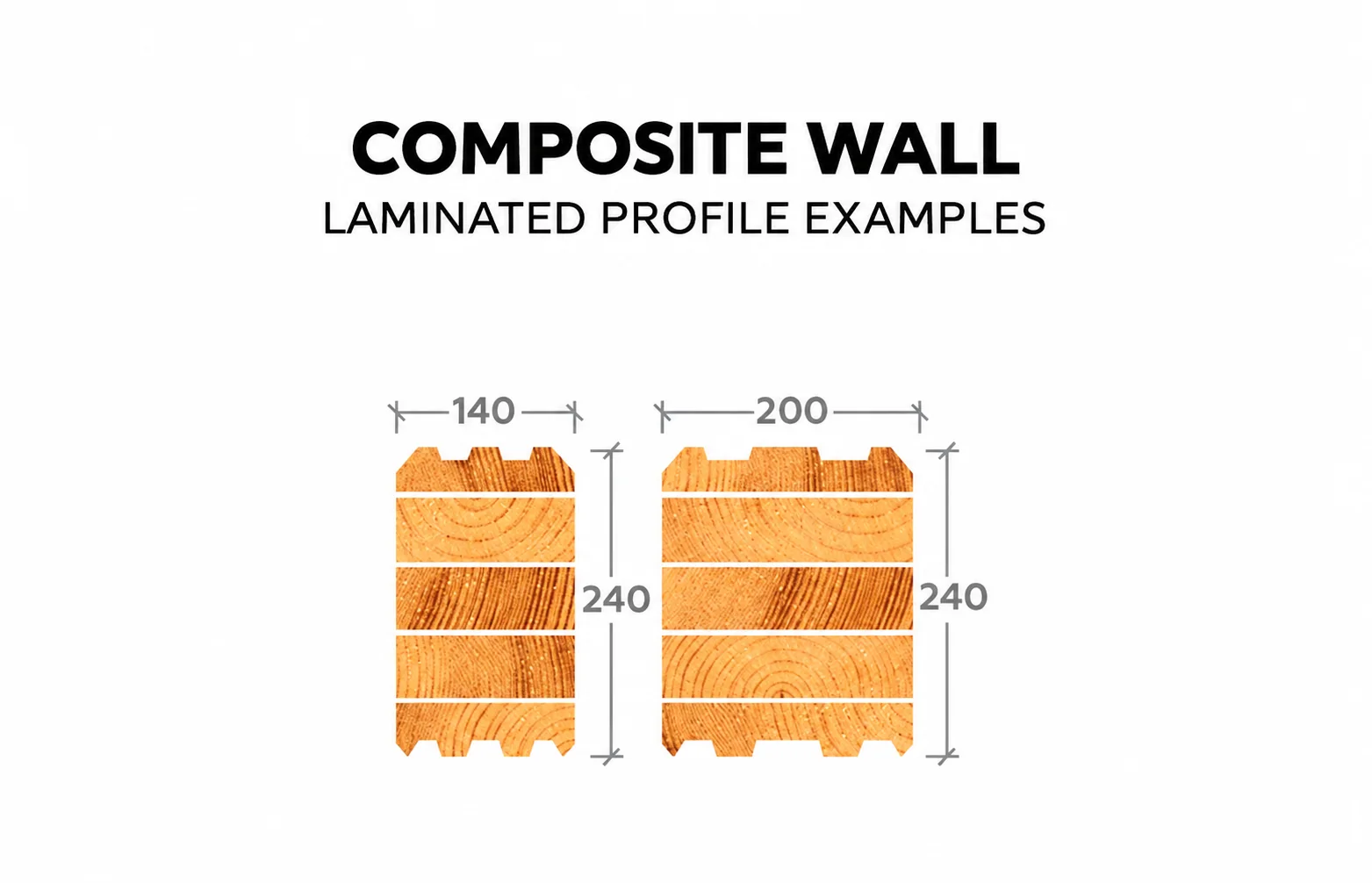
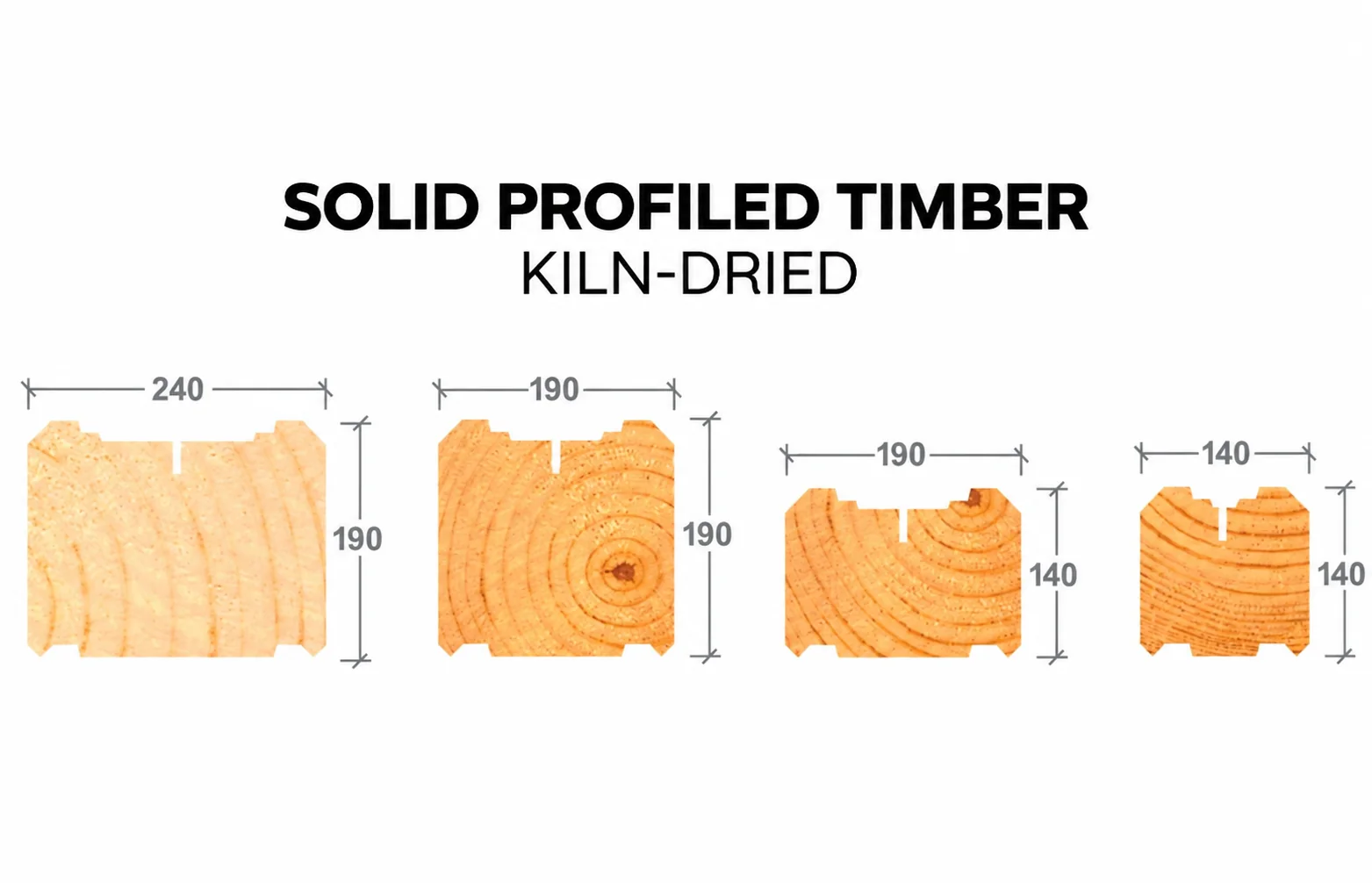
Examples of factory profile families. Solid profiled timber and composite walls are shown separately for comparison; they are not interchangeable with glulam. Exact dimensions, adhesive system, moisture, strength and availability are confirmed in the supplier specification.
Back